By Musa Bakare
The debate ahead of Nigeria’s 2027 general elections centers around continuity, leadership, representation, and accountability.
For President Bola Ahmed Tinubu, the Renewed Hope Agenda in place since May 2023, has earned a second mandate to consolidate.

For Senator Sunday Steve Karimi, representing Kogi West Senatorial District, his interventions, legislative record, and constituency engagement justify continuity in the next National Assembly and beyond.
The Tinubu Administration: Reform and Results since 2023, has pursued far reaching structural reforms, removal of petrol subsidy, unification of the foreign exchange market, fiscal restructuring, and aggressive revenue mobilisation.
The case for continuity rests on four pillars: Economic restructuring and fiscal reform,
according to the Federal Ministry of Finance 2026 dashboard, real GDP growth stood at 4.43% in Q2 2026, with inflation at 15.39% as of August 2026.
Net FAAC revenue rose to ₦21.9 trillion in 2025 from ₦15.2 trillion in 2024. External reserves stood at $54.7 billion as of September 18, 2026.
These indicators offer a basis for evaluating the reform programme and the desire for continuity.
The reforms have significantly expanded distributable revenue to federal, state, and local governments. The argument for continuity is that, greater fiscal space provides an opportunity to finance infrastructure, education, healthcare, security, and grassroots development as it is producing measurable improvements in citizens’ lives.
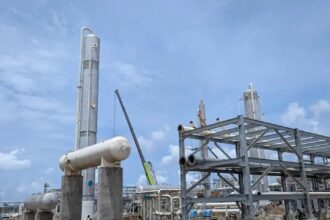
The administration’s infrastructure and investment drive remains central to the quest towards continuity. Nigerians will expect ongoing projects to be completed, new investments to generate employment, and infrastructure spending to boost productivity and connectivity.
Consolidation of reforms and continuity
Proponents argue that structural reforms require time to mature. The IMF’s June 2026 assessment acknowledged improved macroeconomic outcomes, and the need for consolidation. A second term would allow the administration to address weaknesses exposed in the first term and lock in gains.
For Senator Sunday Steve Karimi: The Argument is a very strong favour for legislative continuity
Senator Karimi’s stewardship of Kogi West in the 10th National Assembly has been assessed across the district development, legislative performance, accessibility, infrastructure advocacy, and educational support and strongly in support of continuity.
Educational support and human capital development, a defining feature of his representation is the bursary programme under the Sunday Steve Karimi Education Foundation and the Win With Tinubu and Karimi (WWTK), Kogi State project.
In 2024, ₦100 million was committed to students from Kogi West. In 2025, the programme was expanded to ₦300 million covering all three senatorial districts in Kogi State, targeting 3,000 beneficiaries at ₦100,000 each. In a region where education remains a key driver of social mobility and youth empowerment, this intervention is significant.
Road infrastructure and connectivity he has reported attracted approximately ₦2 billion for the rehabilitation of the Kabba–Egbe Road and securing an additional ₦6 billion intervention from the Federal Ministry of Works to facilitate the contractor’s return to site. He also personally funded the reconstruction of Pakuta Bridge, a vital link between communities in Kogi West and neighbouring parts of Niger State.
The Karimi free bus shuttle in Lokoja, the Kogi State capital, is also cited as an example of people-centred representation begging for continuity.
Grassroots development and community interventions
Other reported interventions include solar-powered boreholes in 30 locations across Kabba/Bunu and Ijumu Federal Constituency, distribution of transformers to communities across the district, empowerment of 50 cooperative societies, and various educational and economic empowerment initiatives. These provide tangible metrics for constituents to evaluate impact.
Legislative experience and institutional continuity, a second term in the Red Chamber would offer an opportunity to build on experience gained in the 10th Senate, deepen legislative relationships, and pursue outstanding constituency priorities. Voters will also weigh attendance, bills sponsored, motions moved, committee contributions, oversight activities, and the well documented outcomes.
Though constitutionally distinct, the two offices intersect in development outcomes:
National economic policy and legislative representation
Federal infrastructure and constituency infrastructure advocacy
National revenue administration and federal resource advocacy
National education policy and local educational interventions
National security policy and legislative oversight
The 2027 election thus presents an opportunity for Nigerians, and particularly the people of Kogi West to evaluate both national leadership and senatorial representation on the basis of evidence, performance, and accountability.
For President Tinubu: sustainable reduction in cost of living, expanded youth employment, improved security nationwide, better access to healthcare and education, completion of critical infrastructure, economic diversification, and transparent management of increased public revenue are what continuity will guarantee.
For Senator Karimi: more federal employment opportunities for Kogi West indigenes, sustained educational support and scholarships, completion and rehabilitation of strategic roads, improved electricity, water and healthcare infrastructure, greater empowerment of women, youths and small businesses, and stronger legislative representation with constituency accountability.
Ultimately, the conversation around second terms for President Tinubu and Senator Karimi is about performance, continuity, and public trust. The case for renewal rests on consolidating national economic reforms, sustaining development interventions, strengthening legislative experience, and fulfilling outstanding commitments. A second term, if granted, must be judged by verifiable achievements and measurable improvements in the lives of the people.
– Musa Asiru Bakare is a political analyst and commentator. He writes from Lokoja, Kogi State.
Views: 8