Advertisement
Advertisement

Advertisement

…Says Nigeria must stop transporting livestock over long distances —
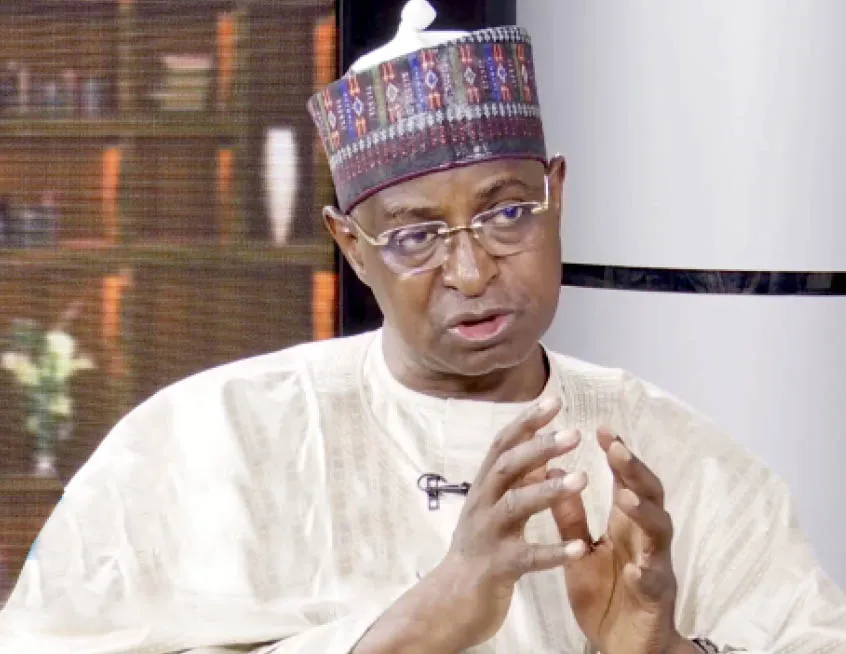
The Minister of Livestock Development, Idi Maiha, has called for an end to the transportation of live animals over long distances for slaughter, urging the establishment of modern abattoirs close to livestock production centres.
Mr Maiha said the practice resulted in avoidable losses, including animal deaths, road accidents and other challenges associated with the country’s livestock supply system.

The minister spoke on Tuesday in Abuja at the opening ceremony of the 2026 Animal Science Meeting, organised by the Animal Science Association of Nigeria (ASAN) and the Nigerian Institute of Animal Science (NIAS).
He said the Federal Government was already establishing standard abattoirs in Edo and Plateau states as part of efforts to transform livestock production and processing.
“We must change the narrative and transform livestock farming in Nigeria. We cannot continue transporting animals thousands of kilometres when we can process them closer to production centres,” he said.
According to him, modern abattoirs would create employment opportunities, improve meat processing and ensure better utilisation of livestock resources.
Maiha said the facilities would also enable the collection and processing of animal by-products, including blood, bones, hides and hooves, which could generate additional revenue for the country.
He urged Nigeria to embrace modern livestock production and processing practices, citing Brazil as an example of a country with a competitive meat processing industry.
The minister said Nigeria had the resources, expertise and human capital required to transform the sector, calling for stronger collaboration among researchers, animal scientists, government and private investors.
In his keynote address, Chidozie Onyedikachi Anyiro, an agricultural economist with the World Bank’s Agriculture and Food Global Practice, said Nigeria spent an estimated $1.5bn annually on dairy imports despite its enormous livestock resources.
Anyiro described the expenditure as a major economic opportunity being lost, stressing that Nigeria needed to improve livestock productivity rather than merely increase the number of animals.
He said the livestock sector contributed between two and three per cent of Nigeria’s Gross Domestic Product, GDP, despite employing about 30 per cent of the rural population.
According to him, the sector accounted for less than 10 per cent of agricultural GDP, indicating significant opportunities for economic growth, employment generation and wealth creation.
He said transforming the sector required fundamental changes in animal breeding, feeding, healthcare, financing, processing and marketing.
“An important message is that innovation must become the driving force behind this transformation, as Nigeria cannot transform its livestock sector by doing more of what it has always done,” he said.
Anyiro explained that innovation went beyond technology to include improved production practices, new business models, institutional reforms, financing arrangements and stronger market systems.
He identified investment in science, enterprise development and resilient value chains as three major drivers of livestock transformation.
According to him, investment in science would promote genetic improvement, reproductive technologies, animal health, feed development and digital livestock management.

He said scientific discoveries must also be translated into commercially viable products and services through improved access to finance and markets.
On value chains, Anyiro said investment would strengthen livestock production, processing, storage, transportation and marketing while addressing challenges associated with animal diseases, climate change and farmer-herder conflicts.
He described livestock as a sustainable economic asset because animals reproduce and generate value, unlike crude oil, which is depleted once extracted and sold.
“A barrel of crude oil once sold is gone forever, but a cow, goat or sheep can feed a family, generate income and reproduce its value year after year,” he said.
The economist urged researchers to make their findings commercially useful, address the feed gap, improve indigenous animal breeds and embrace digital innovation.
He also called for greater opportunities for women and young people in the sector.
Anyiro said the Federal Government had an important role to play in providing policy direction, strengthening animal health services and creating an enabling environment for private investment.
He highlighted the World Bank-supported $500m Livestock Productivity and Resilience Support (L-PRES) project as part of efforts to improve productivity and resilience in the sector.
He said the project was being implemented in 29 states, with emphasis on productivity, commercialisation, job creation and improved livelihoods.
The economist urged animal scientists to ensure that research findings moved beyond laboratories to reach farmers, processors and other operators across the livestock value chain.
Earlier, the President of the Nigerian Institute of Animal Science, Simeon Ohwofa, said animal agriculture had the potential to become a major driver of Nigeria’s non-oil economic growth.
He said the sector provided food, employment and raw materials for industries, while offering opportunities for foreign exchange earnings.
“Animal agriculture puts food on tables, gives work to our young, supplies raw materials to industry and can earn for our economy, foreign exchange,” he said.
Ohwofa said consistent government policies were necessary to unlock the sector’s potential, warning that frequent policy changes could undermine agricultural development.
“With sound, consistent and long-term government policies, agriculture can actually thrive, but the reverse would be the case if we have truncated and often changed policies,” he said.
He disclosed that 277 animal scientists would be registered at the meeting, while 14 others would be inducted as associate animal scientists.
Ohwofa said the new entrants were joining the profession at a defining moment for the sector.
He called on researchers, industry leaders and development partners to strengthen collaboration and translate scientific breakthroughs into commercial opportunities.