Advertisement
Advertisement

Advertisement

By Hassan A. Karofi — The choice of dates in politics is often presented as a matter of administrative convenience. Yet history teaches us that dates carry powerful symbolism, particularly in societies where collective memories of tragedy and triumph remain deeply rooted. As Nigeria prepares for a presidential election scheduled for January 16, 2027, it is important to reflect on what that date means to millions of people, particularly in Northern Nigeria, where January 16 is associated with one of the darkest episodes in the country’s history.
The significance of January 16 cannot be understood without revisiting the events surrounding the country’s first military coup. In the early hours of January 15, 1966, a group of young military officers launched Nigeria’s first coup d’état. By the morning of January 16, the consequences of the coup had become evident. Several of the country’s most prominent political and military leaders had been assassinated.
Among those killed were Sir Ahmadu Bello, the Sardauna of Sokoto and Premier of Northern Nigeria; Sir Abubakar Tafawa Balewa, Nigeria’s first prime minister; Brigadier Samuel Ademulegun; Brigadier Zakariya Maimalari; and other senior political and military figures. Although leaders from different regions were affected, the perception in the North was that the coup disproportionately targeted Northern political leadership. This perception would profoundly shape political attitudes and inter-ethnic relations for decades.

The events that followed the coup further deepened Northern grievances. Major General Johnson Aguiyi-Ironsi assumed power and suspended parts of the constitutional order. In many parts of Northern Nigeria, suspicion and anger grew rapidly, culminating in the counter-coup of July 1966. The resulting instability ultimately contributed to the chain of events that led to the Nigerian Civil War.
More than six decades later, the memory of January 1966 remains alive. For many Northern families, historians, traditional institutions and political observers, January 16 is not merely another date on the calendar. It is a reminder of a traumatic turning point that altered Nigeria’s political trajectory and claimed the lives of leaders who continue to be revered across the region.
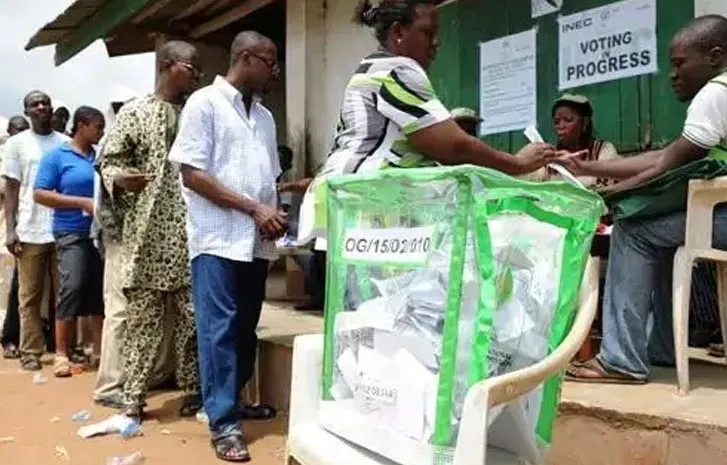
Against this backdrop, the decision to hold a presidential election on January 16 raises legitimate questions. Whether the date was chosen for logistical, constitutional or electoral reasons, policymakers should recognise that symbolism matters in politics. Elections are national events intended to unite citizens around a shared democratic purpose. When an election coincides with a date associated with historical mourning for a significant section of the country, there is a risk that the symbolism could overshadow the democratic exercise itself.

This concern is not necessarily about rejecting the election or questioning its legitimacy. Rather, it is about understanding how political decisions are perceived. In a diverse society such as Nigeria, sensitivity to historical memory is an important component of nation-building. Governments regularly avoid scheduling major celebrations on dates associated with national tragedies. The same principle can reasonably be applied to major political events.
There is also the risk of misinterpretation. In an era of social media, symbolism can quickly become politicised. Political actors may exploit the coincidence to revive old grievances, reinforce regional narratives or deepen distrust among communities. What may have been intended as a neutral administrative decision could inadvertently reopen historical wounds.
Supporters of the January 16 date may argue that Nigeria cannot permanently suspend public activities because of historical anniversaries. They may also point out that democracy requires adherence to electoral timelines, regardless of symbolism. These arguments deserve consideration. However, they do not absolve policymakers of the responsibility to assess whether alternative dates could achieve the same constitutional objectives without generating unnecessary controversy.
A mature democracy is defined not only by the conduct of elections but also by sensitivity to the historical experiences of its citizens. The memory of the January 1966 coup remains a significant part of Northern Nigeria’s political consciousness. For many, the date symbolises loss, betrayal and the beginning of a national crisis from which the country took years to recover.
As Nigeria continues its democratic journey, its leaders should remember that national unity is strengthened when historical sensitivities are acknowledged rather than dismissed. The question, therefore, is not whether an election can legally be held on January 16. The more important question is whether it is politically wise and symbolically appropriate to do so.
History may not dictate the future, but ignoring its lessons often comes at a cost. For many in Northern Nigeria, January 16 remains a day of remembrance. Policymakers would do well to reflect on whether a date synonymous with mourning is the right day for a defining national political contest.
Hassan A. Karofi is a policy and advocacy expert and a doctoral candidate at Bingham University, Abuja. His doctoral research examines peer-to-peer (P2P) learning as a social and behavioural change communication strategy for mitigating gender-based violence (GBV) in Northern Nigeria. He can be reached at hassankarofi@yahoo.com.