Advertisement
Advertisement

Advertisement

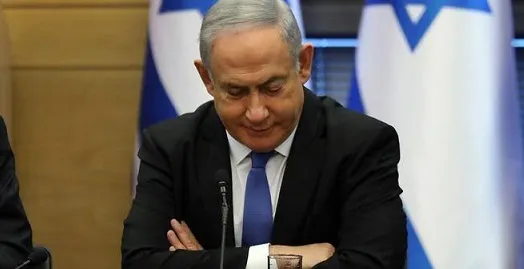
Israeli Prime Minister Benjamin Netanyahu is scrambling to remain in power after an inconclusive election left his right-wing bloc short of a parliamentary majority, setting the stage for difficult coalition negotiations.
Preliminary results from Tuesday’s election showed Netanyahu’s Likud-led bloc projected to win 53 seats in the 120-member Knesset, Israel’s parliament, while an opposition alliance led by former military chief Gadi Eisenkot was projected to secure 48 seats.
Arab-led parties were projected to win 19 seats, potentially giving them a decisive role in determining who forms the next government. A minimum of 61 seats is required to secure a parliamentary majority.

The results leave Netanyahu in a stronger position as leader of the largest bloc, but without a clear path to forming a stable government. He is expected to remain caretaker prime minister while political leaders negotiate possible alliances.
The election, the first since the Hamas-led attacks of October 7, 2023, and the subsequent regional conflicts, was widely seen as a referendum on Netanyahu’s leadership and his handling of security challenges.
Netanyahu campaigned on his government’s military achievements and the need to confront threats from Iran. However, he continues to face criticism over security failures surrounding the October 7 attacks, his handling of the wars and his opposition to an independent inquiry into the failures.

His political survival also remains complicated by disagreements over exemptions from military service for ultra-Orthodox Jewish men and his reliance on far-right allies.
Eisenkot’s opposition alliance faces its own challenge. Although it has vowed to bring political change, its route to power could depend on support from Arab-led parties, cooperation that several Jewish political leaders have resisted.
Arab parties’ strong performance has therefore emerged as a major factor in the post-election negotiations.
Israeli President Isaac Herzog is expected to consult party leaders after the official results are published before deciding whom to nominate to form a government.
If successive attempts to form a coalition fail, Israel could face another election, prolonging the political uncertainty.
Meanwhile, US President Donald Trump has publicly backed Netanyahu, adding an international dimension to the contest over who will lead Washington’s closest Middle Eastern ally.