
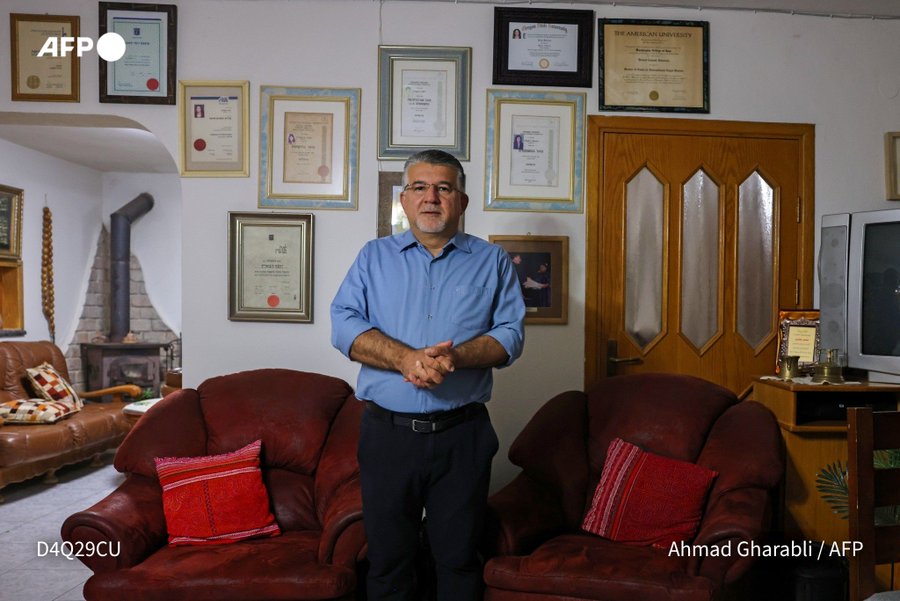
Joint List leader Yousef Jabareen has urged opposition parties in Israel to accept what he described as the “political reality” and work with Arab-led parties to remove Prime Minister Benjamin Netanyahu from power. Jabareen, who heads the largest Arab-majority party in the incoming Israeli parliament, told AFP on Monday that……
Joint List leader Yousef Jabareen has urged opposition parties in Israel to accept what he described as the “political reality” and work with Arab-led parties to remove Prime Minister Benjamin Netanyahu from power.
Jabareen, who heads the largest Arab-majority party in the incoming Israeli parliament, told AFP on Monday that opposition members reluctant to cooperate with Arab parties should reconsider their position.
His appeal follows last week’s inconclusive election, which left both major political blocs short of the 61 seats required for a parliamentary majority.
The pro-Netanyahu bloc secured 53 seats, while the opposition camp won 48.
However, the Joint List and another Arab-led party, Raam, secured 11 and eight seats respectively, giving the opposition a potential path to a majority if it accepts their support.
The Arab parties’ performance “is what is stopping Netanyahu from celebrating the continuation of his government,” he said, calling it “a far-right government with all the dangers it represents”.
READ ALSO: Netanyahu Bloc Pressures Arab-Israeli Leaders Over Funding Allegations
He criticised holdouts in the opposition camp who have publicly voiced opposition to a coalition that includes Arab parties, including Avigdor Liberman’s secular-right Yisrael Beiteinu.
“Like everyone else in the political arena, Lieberman must deal with the political reality and the numbers in the Knesset,” or parliament, Jabareen said.
“Given the current parliamentary arithmetic, Netanyahu’s government… cannot be replaced without coordination with the Joint List,” he said in an interview in Nazareth, an Arab stronghold and the boyhood home of Jesus Christ.
Israeli-Arabs, who make up around 20 percent of the population, are descendants of Palestinians who stayed after Israel’s creation in 1948.
Distance from main parties
Israeli President Isaac Herzog will begin meeting this week with representatives of parties that won seats in the October 27 vote, to determine to which leader to give the first shot at forming a government.
Opposition camp leader Gadi Eisenkot has expressed misgivings about a coalition government including Arab parties, but has not ruled it out publicly.
Netanyahu, meanwhile, spent the campaign painting the parties as a threat to the country.
Jabareen said he had met with Raam leader Mansour Abbas on Monday, and would the following day with The Democrats’ Yair Golan, the veteran left-winger who is the only member of the opposition bloc publicly to urge a governing partnership with the Arab-led parties.
“The political landscape is now clear: the opposition parties do not have a majority to pass legislation without the Joint List. We are therefore saying that we are willing to extend our hand in support in legislation and decisions that serve our political project and programme.”
‘Room for dialogue’
The Joint List diverges strongly from most Jewish-majority opposition parties in key areas including in its support for a Palestinian state.
Jabareen played down such issues, saying his party was focused on the interests of Arab-Israelis.
“The need to ensure their safety in the face of crime and violence, house demolitions, discriminatory policies and budget allocations are issues on which there is room for dialogue,” he said.
But he said potential partners would have at least to look positively on the party’s positions repudiating Netanyahu including his “path of wars, destruction in Gaza and settler terrorism in the West Bank”.
Eisenkot shares much of Netanyahu’s security outlook, and his opposition to a Palestinian state. But he has promised to repair the damage done to Israel’s international standing by the devastating Gaza war, and to crack down on West Bank settler violence.
“What I would emphasise is that our positions are based on human rights and are supported by international law and international conventions,” Jabareen said.
“These positions can only be described as extremist if the person making that accusation is himself an extremist.”
AFP