Advertisement
Advertisement

Advertisement

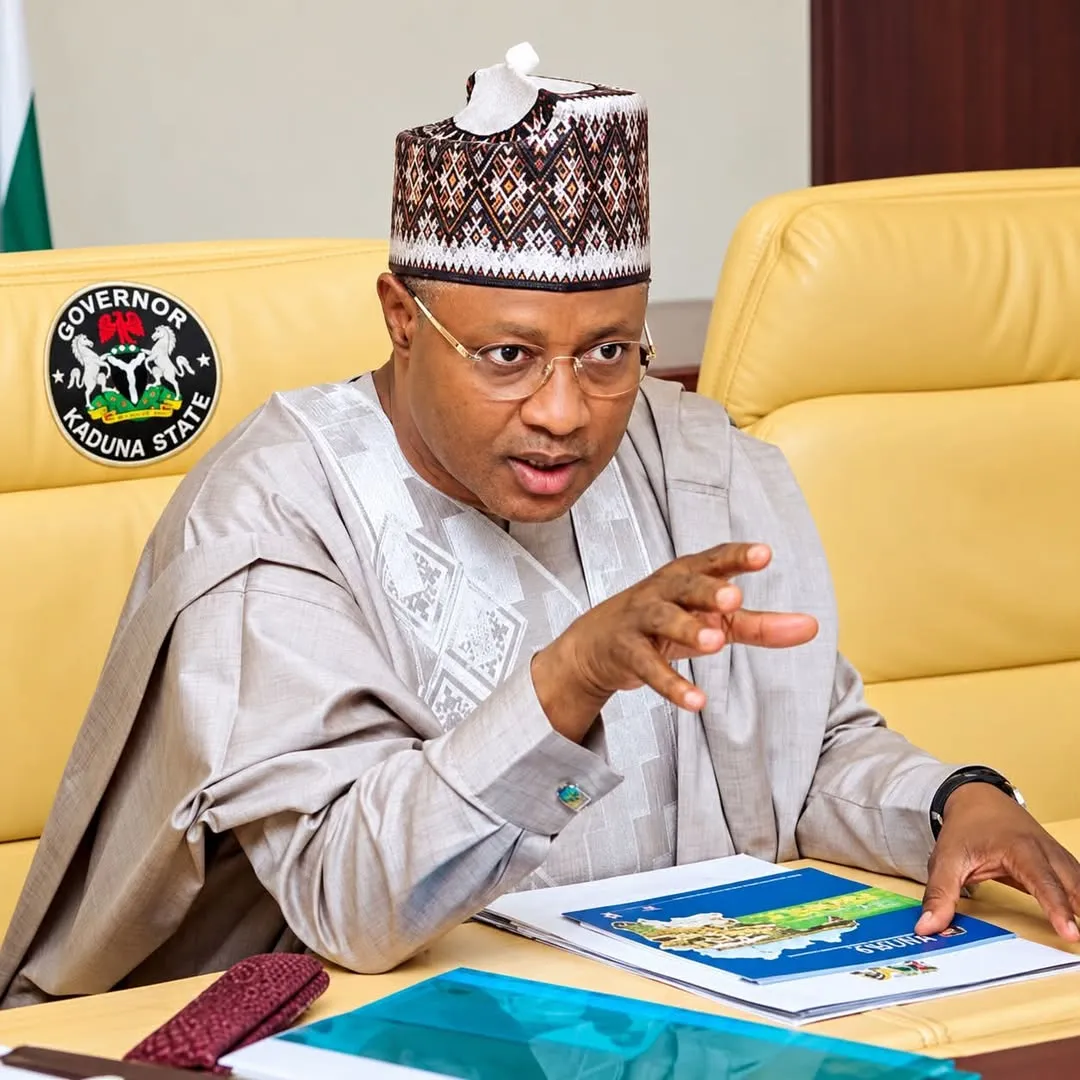
Kaduna State Governor Uba Sani has urged Northern political elites to focus on developing a common blueprint for addressing the region’s challenges rather than concentrating solely on the struggle for political power at the centre.
Mr Sani identified out-of-school children, inadequate skills-based education and poor healthcare delivery as some of the major challenges confronting the region.
The governor spoke on Wednesday when the leadership of the Sir Ahmadu Bello Memorial Foundation paid him a courtesy visit at the Council Chambers of the Kaduna State Government House.

He commended the foundation for drawing the attention of Northern political leaders to the need to prioritise human capital development, saying the region lacked a common agenda for tackling its challenges.
Mr Sani said the forthcoming Sir Ahmadu Bello Memorial Foundation Summit, with the theme, “Good Governance, Industry and Creativity, as well as Sustainable Development,” was timely.
“I’m happy the Sir Ahmadu Bello Memorial Foundation is leading in this direction because we need to sit down, look at our problems and address them holistically,” he said.
The governor also decried the high rates of maternal and child mortality in Northern Nigeria and the large number of children out of school, as well as the shortage of skills-based education in the region.
He said his administration had focused on strengthening primary healthcare to meet the needs of poor and rural residents, while also improving secondary healthcare services.
“For us, healthcare in Kaduna is the fundamental right of everyone, particularly the less privileged and the vulnerable within our society,” he said.
Quoting UNICEF statistics, Mr Sani said Nigeria had about 18 million out-of-school children, with 70 per cent of them in Northern Nigeria.

He said more than 500,000 children were roaming the streets of Kaduna State when he assumed office, adding that his administration had returned about 360,000 of them to school.
According to him, the state’s household-mapping approach, which was used to identify out-of-school children, had been adopted by the Federal Ministry of Education as a model for addressing the national challenge.
On skills-based education, Sani said Vice President Kashim Shettima had written to him about three months ago, requesting that Kaduna State allow the Federal Government to use the state’s model.
He said the state had established the Institute of Vocational Training and Skills Development, with campuses in Soba, Rigachikun and Saminaka, covering the Northern, Central and Southern senatorial districts respectively.
He said the institute offered practical training in areas including information and communication technology, mechatronics and renewable energy, with the aim of linking education to employment, entrepreneurship and emerging industries.
Mr Sani said the institute had so far graduated more than 4,000 artisans and tradespeople.
“Now, we’re looking at admitting about 32,000, and that means in a year, we have the capacity to train at least over 30,000 youths, who will be given certification at the end of their training that will enable them to work anywhere in the world,” he said.
Earlier, former Niger State Governor, Mu’azu Babangida Aliyu, who led the delegation, thanked Sani for allocating 50 hectares of land to the foundation for the establishment of Arewa Unity University.
Mr Aliyu recalled that the late Governor Patrick Yakowa had also allocated land adjacent to Murtala Mohammed Square to the foundation, where its office was subsequently built.
He said the forthcoming summit would be held on October 28, 2026, with Governor Sani as the Chief Host and Special Guest of Honour.