Vice President Kashim Shettima has warned that Nigeria’s dependence on food imports threatens its sovereignty, saying the country must strengthen local production to achieve food security. Shettima said this on Thursday during the Ethiopia–Nigeria Leadership Exchange, where he led a Nigerian delegation on a tour of farms and agricultural facilities……
Vice President Kashim Shettima has warned that Nigeria’s dependence on food imports threatens its sovereignty, saying the country must strengthen local production to achieve food security.
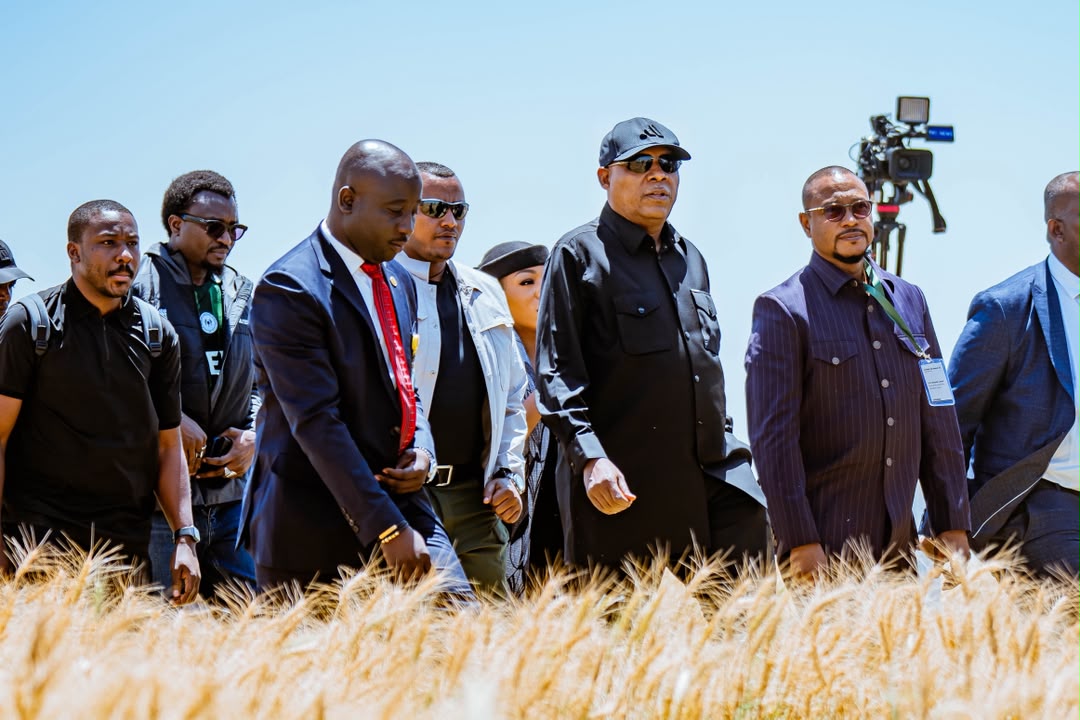
Shettima said this on Thursday during the Ethiopia–Nigeria Leadership Exchange, where he led a Nigerian delegation on a tour of farms and agricultural facilities in Ethiopia’s Oromia region.
According to a statement by his Senior Special Assistant on Media and Communications, Stanley Nkwocha, the Vice President identified Ethiopia’s agricultural transformation as a model Nigeria could adopt to expand production and reduce dependence on imported food.
“Food dependency compromises our sovereignty. Without independence in food production, a nation remains incomplete in its sovereignty,” Shettima said.
He said Nigeria planned to draw lessons from Ethiopia’s experience in large-scale mechanised farming, improved seeds and climate-smart agriculture.
“We intend to embrace improved seeds, mechanization, and climate-smart agriculture,” he stated.
Shettima commended Ethiopia for transforming its wheat production from dependence on imports to self-sufficiency, with surplus production now exported to neighbouring countries, including Djibouti and Kenya.
He also noted the country’s progress towards self-sufficiency in rice production, describing its agricultural development as a model for other African nations.
“Africa must learn to feed itself. Ethiopia is doing it and Nigeria is on course to do the same. Ethiopia is a success story worthy of emulation,” the Vice President said.
He expressed optimism that closer cooperation between Nigeria and Ethiopia could improve food security across the continent, adding that both countries had the population and agricultural potential to support Africa’s food needs.
Shettima said, “I am overwhelmed with joy that the real economic renaissance of Africa is in the offing. Ethiopia has become the pathfinder, the front runner in us reclaiming our pride and our continent. We are mightily proud of them.”
The Vice President also announced plans for Nigeria to plant 20 billion trees from the next rainy season, drawing lessons from Ethiopia’s Green Legacy Initiative, which combines environmental restoration with economic and livelihood benefits.
“We will embark on a massive tree-planting campaign in the next rainy season. It requires a lot of planning, energy and drive, which Ethiopia was able to galvanize its population into doing. We intend to plant 20 billion trees,” he said.
He added that the initiative would support environmental restoration and create employment opportunities.
Earlier, the President of Oromia Regional State, Shimelis Abdisa, outlined Ethiopia’s agricultural progress, saying more than 200 crop varieties were cultivated across the country.
Abdisa said Ethiopia had expanded agricultural exports, including bananas, avocados and coffee, while wheat production generated more than $3.1 billion annually.
He also announced a collaboration with the Dangote conglomerate to produce fertiliser for farmers in the region.
According to the statement, Shettima visited wheat, banana and papaya farms during the tour to observe Ethiopia’s agricultural production systems and efforts to increase food output.