Rising energy costs, poverty and the struggle to provide affordable electricity have made it difficult for Nigeria and other countries to keep their promises on climate change.
For many governments, keeping food prices under control, providing electricity and creating jobs have become more pressing concerns than reducing the use of oil, gas and coal.
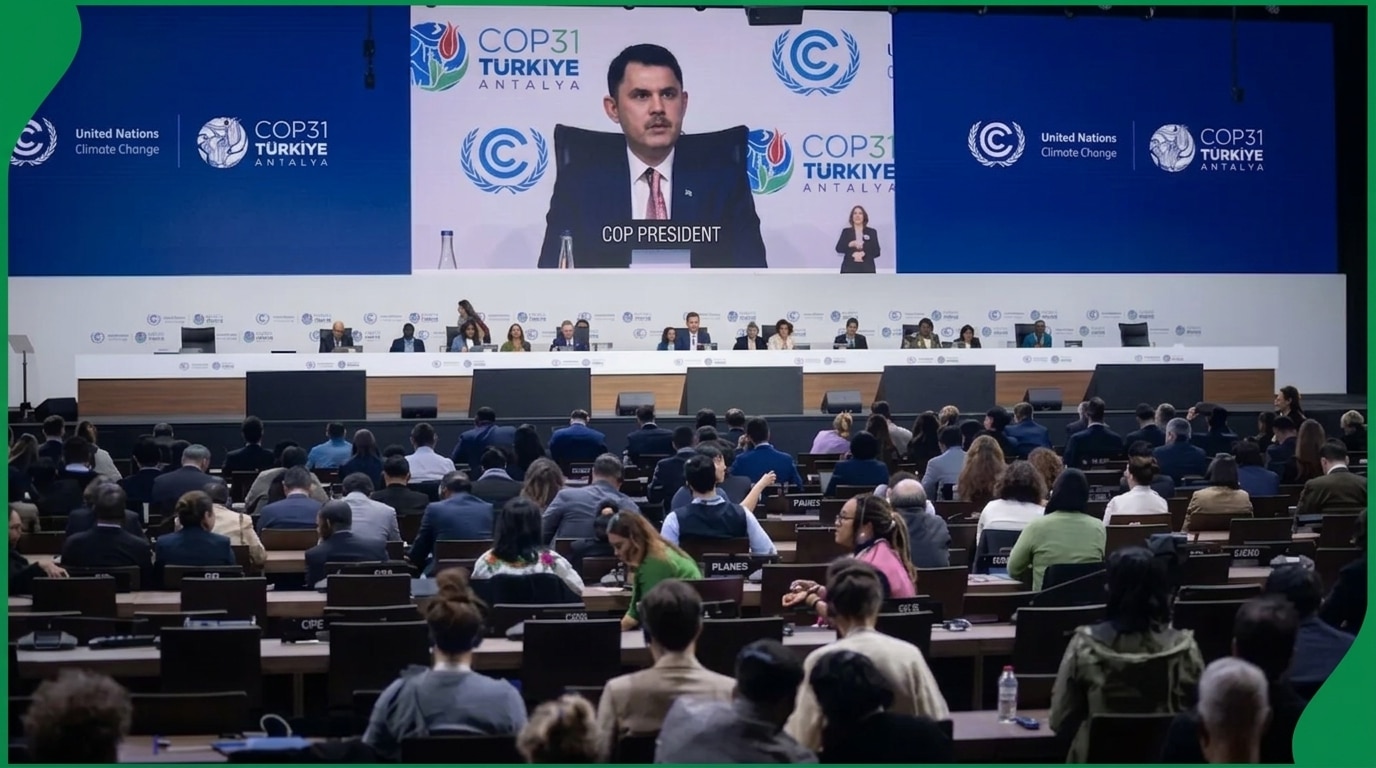
Naija News reports that this challenge was clearly reflected at the 2026 United Nations Climate Change Conference (COP31) in Antalya, Türkiye, where nearly 200 countries failed to agree on measures to speed up global climate action.
The disagreement exposed the growing gap between countries pushing for a faster shift away from fossil fuels and those insisting that economic development and energy security must come first.
The pressure is particularly high in developing countries, where millions of people still lack reliable electricity, affordable cooking fuel and basic infrastructure.
For such countries, a sudden move away from fossil fuels could increase the cost of electricity, transport and production if cheaper and reliable alternatives are not available.
Why COP31 Countries Failed To Agree
The climate conference, which was initially expected to end on November 20, continued beyond its scheduled closing date as countries struggled to agree on a final document.
COP31 President Murat Kurum presented a revised proposal early Sunday in an attempt to resolve disagreements between the co-hosts, Türkiye and Australia, and other participating countries.
Earlier drafts had faced objections from Europe, Africa, Latin America and Pacific countries after direct references to phasing out fossil fuels were removed.
The revised document referred to the 2023 Dubai agreement on moving away from fossil fuels and mentioned carbon capture and storage. However, it did not specifically name fossil fuels.
One of the major proposals was to increase electricity’s share of global final energy consumption from about 23 per cent to 35 per cent by 2035.
Other proposals focused on reducing methane emissions, promoting zero waste and making buildings more energy-efficient.
Developing countries and those most exposed to climate change also demanded reliable funding to help them adapt to rising temperatures, floods, droughts and other environmental problems.
They called for climate decisions to follow scientific evidence, a fair transition away from fossil fuels, more funding from major polluters and faster investment in renewable energy.
However, the disagreements remained unresolved.
At the end of the negotiations, Kurum admitted that countries had failed to reach an agreement on the proposed text.
“I understand that there is no agreement on this text. For that reason, these decisions have not been adopted,” he said.
The failure reflected the differences between countries that want stronger action against global warming and those worried about the effect of abandoning oil, gas and coal on their economies.
Some compromise proposals acknowledged that the world was on course to exceed the 1.5°C warming limit and called for greater investment in technologies that remove carbon from the atmosphere.
However, critics argued that the proposals weakened earlier commitments and did not go far enough to address the climate crisis.
United Nations Secretary-General António Guterres expressed disappointment over the outcome.
He said the failure to reach an agreement did not change the scientific evidence showing that the world needed to take urgent action.
“There may be no consensus in the negotiating room, but there is no ambiguity in the science. The take-home message from COP31 is clear: The world must do much more to confront the climate crisis. And it must do it now,” Guterres said.
Energy Crisis Makes Climate Action More Difficult
The growing energy crisis has also made it harder for governments to commit to reducing their dependence on fossil fuels.
The International Energy Agency’s World Energy Outlook 2026 highlighted how disruptions in global energy supplies could affect efforts to move towards cleaner energy.
According to the report, disruptions around the Strait of Hormuz in 2026 caused the largest energy supply shock on record, with cumulative losses of 2.8 billion barrels of oil and 60 billion cubic metres of gas.
Diesel prices reportedly rose above $200 per barrel, with African and Asian countries that depend heavily on imported energy among the worst affected.
Higher energy prices affect almost every part of the economy. They increase electricity bills, transport fares and the cost of producing goods and services.
As a result, governments are under pressure to protect households and businesses from rising costs rather than introduce policies that could make energy more expensive.
The situation could also push poor households back to using firewood and charcoal for cooking, increasing health risks, deforestation and pollution.
Poverty makes the situation even more difficult.
The World Bank estimates that about 811 million people, representing one in every 10 people globally, live on less than $3 daily. Another 3.7 billion people survive on less than $8.30 a day.
For people in these conditions, increases in food, transport and energy prices can have serious consequences.
The debate over fuel subsidies is another example of the challenge.
Although removing subsidies can provide governments with more money for infrastructure, healthcare and clean-energy projects, such decisions often face public resistance when they increase the cost of living.
Without proper support for low-income households, subsidy reforms can deepen economic hardship.
For Africa, the disagreement between economic development and climate action is particularly important.
Although the continent has contributed relatively little to historical global emissions, it is among the regions facing serious climate challenges.
Rising temperatures, changing rainfall patterns, droughts, floods, coastal erosion and declining agricultural production continue to threaten livelihoods across the continent.
At the same time, many African countries are still struggling to provide reliable electricity, create jobs and develop their industries.
Nigeria is one of the countries facing this difficult balance.
The country needs huge investments to increase electricity generation, improve the national grid, provide clean cooking alternatives and support industrial growth.
Even renewable energy projects require adequate funding, battery storage, transmission infrastructure and stable government policies to succeed.
Nigeria’s Oil And Gas Dependence Complicates The Transition
Rising energy prices have increased interest in electric vehicles and other alternative energy sources. However, economic pressure and concerns about reliable electricity continue to make governments cautious about abandoning fossil fuels.
Nigeria’s situation is particularly complicated.
Despite its large oil and gas reserves, the country continues to struggle with inadequate electricity supply, energy poverty, weak industrial capacity and limited investment in critical infrastructure.
Oil and gas remain important sources of government revenue, foreign exchange and private investment.
Natural gas is also considered important for increasing electricity generation, supporting manufacturing and expanding the economy.
Managing Director of Azura Power, Edu Okeke, argued that Nigeria and other African countries should focus on economic development and energy security before accepting restrictions on fossil-fuel investment.
“First, Nigeria and broadly other African countries need to develop. They cannot do that without fossil fuels. Before climate commitments, we should think of energy security first,” he said.
Okeke welcomed the absence of restrictions on fossil fuels at the summit, arguing that countries such as Nigeria should have the freedom to develop their natural resources.
His position reflects concerns among African energy stakeholders that climate policies should not prevent countries from providing electricity and improving living conditions for their citizens.
However, continued investment in oil and gas also comes with risks if Nigeria fails to prepare for changes in the global energy market.
The country will need to balance the use of its existing resources with investments in renewable energy and other cleaner alternatives.
Nigeria’s participation at COP31 has also attracted attention, particularly over the size of its delegation and what the country gained from the conference.
With 1,506 delegates, Nigeria had the third-largest national delegation at the summit in Antalya, behind Türkiye and Brazil.
The figure was higher than the 1,453 participants recorded at COP30 in Brazil in 2025.
However, the size of the delegation has raised questions about how well Nigeria coordinated its participation and whether the benefits justified the cost.
Former President of the Nigerian Economic Society, Prof. Adeola Adenikinju, criticised what he described as poor coordination and a lack of proper assessment of Nigeria’s participation in international climate meetings.
He argued that the country’s financial situation should be considered when deciding the number of officials attending such conferences.
“Our participation in international meetings like the COP does not reflect our financial situation. There is a serious lack of coordination behind the representation. There are no cost and benefit analyses done and I doubt if attendance is coordinated,” he said.
Adenikinju also raised concerns that some officials might be using their positions to secure opportunities for individuals whose attendance may not serve Nigeria’s interests.
He recommended that the National Council on Climate Change (NCCC) take charge of coordinating Nigeria’s delegation at future conferences.
He also called for detailed reports showing the number of people who attended, their responsibilities, the agreements reached and the benefits recorded.
Okeke also questioned the contributions of Nigerian government officials at the summit, saying their participation should be measured by what they brought to the negotiations and achieved for the country.
“All those who went to COP, what did they really contribute to the sessions?” he queried.
Nigeria Records Potential Investment Deals
Despite the concerns over the size of its delegation, Nigeria recorded some potential investment gains at COP31.
The proposed deals and initiatives include a $750 million UK-Nigeria pension-backed infrastructure memorandum of understanding aimed at mobilising pension funds for energy, transport and digital infrastructure.
Others include a $3 million climate-smart greenhouse pilot project in Kano State and a proposed $1 billion NIRSAL Climate Finance Facility to attract investment and reduce risks associated with climate-smart agriculture.
However, the actual benefits of these initiatives will depend on whether they are implemented, properly monitored and translated into measurable improvements.
For Nigeria, the bigger challenge is turning international agreements and investment promises into projects that improve electricity supply, create jobs, reduce poverty and protect communities from climate-related disasters.
The country must also develop a clear plan to expand renewable energy and reduce emissions while making responsible use of its oil and gas resources.
Meanwhile, civil society organisations under the Climate Action Network (CAN) accused developed countries, particularly the European Union, of frustrating efforts to reach a stronger climate agreement.
CAN Executive Director, Tasneem Essop, criticised the leadership of the Turkish and Australian COP31 presidencies, accusing them of allowing corporate interests to influence the negotiations.
She also argued that a lengthy final document distracted attention from the main issues and created room for greater reliance on carbon capture and carbon-removal technologies.
“This was the worst COP ever,” she said.
“Rich nations gutted the very measures that could have made a difference.”
Similarly, Power Shift Africa founder, Mohamed Adow, criticised developed countries for demanding stronger climate commitments from poorer nations without providing enough financial and technical support.