Vice-President Kashim Shettima has urged federal and state governments, security agencies, the private sector and international partners to ensure the effective implementation of Nigeria’s National Drug Control Master Plan (NDCMP) 2026–2030….
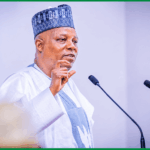
Vice-President Kashim Shettima has urged federal and state governments, security agencies, the private sector and international partners to ensure the effective implementation of Nigeria’s National Drug Control Master Plan (NDCMP) 2026–2030.
Shettima said the success of the five-year plan would depend on sustained commitment, adequate funding, coordination and accountability among all stakeholders.
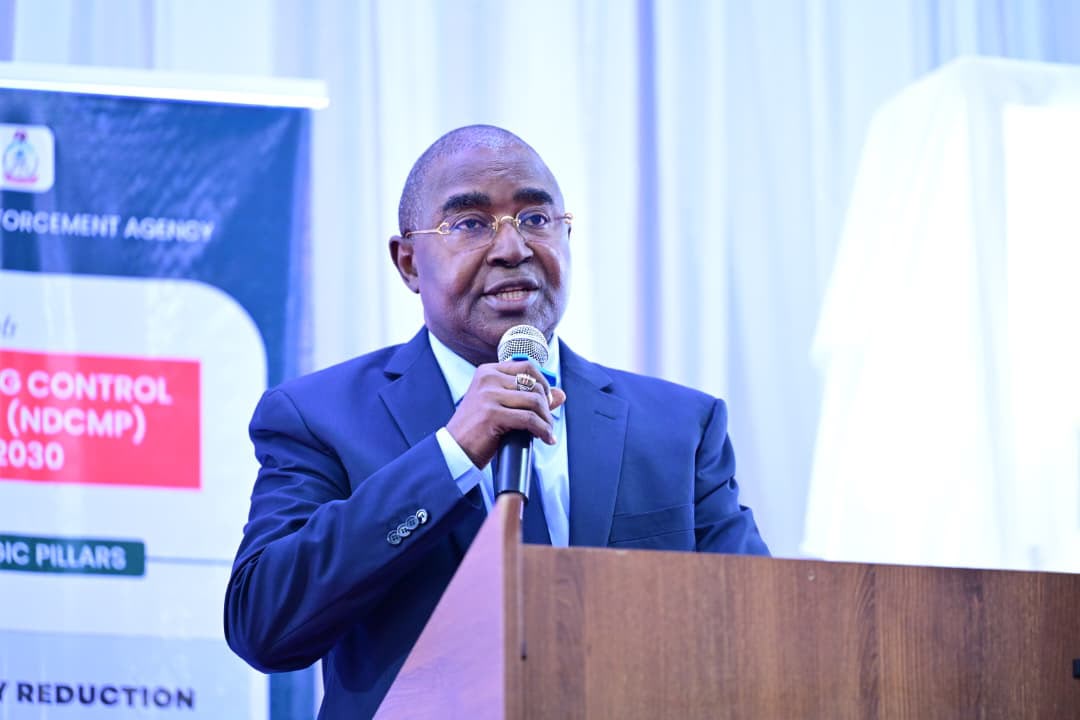
He spoke on Monday in Abuja at the official launch of the Master Plan, where he was represented by the Special Adviser to the President on Special Duties, Office of the Vice-President, Dr Modibbo Aliyu Umar.


The Vice-President, who commended the document on behalf of President Bola Tinubu, described drug control as a national priority, warning that Nigeria could not secure its future without protecting the people responsible for building it.
According to him, Nigeria’s response must combine prevention, treatment, rehabilitation and decisive action against illicit financial flows sustaining drug markets.
Shettima outlined six pillars of the new Master Plan: supply reduction, drug demand reduction, access to controlled medicines for scientific and medical purposes, alternative development and sustainable livelihoods, disruption of the illicit drug economy, and governance, financing and coordination.
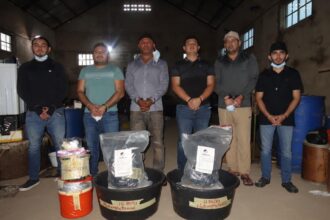
He commended the National Drug Law Enforcement Agency (NDLEA), under the leadership of Brigadier-General Mohamed Buba Marwa (retd.), for introducing Africa’s first Alternative Development programme, whose pilot initiative is already transforming three communities in Ondo State.
He urged state and local governments to embrace the programme and take ownership of initiatives that provide alternative livelihoods for communities involved in illicit drug cultivation.
He therefore directed ministries, departments and agencies to incorporate the plan’s priorities into their work programmes, budget proposals and implementation schedules.
“Five years from now, the significance of today’s launch will not be judged by the ceremony,” Shettima said. “Let this be the moment Nigeria moves from policy to action.”
Earlier, NDLEA Chairman, Marwa, said the new Master Plan was designed to consolidate previous achievements, address identified weaknesses and respond to emerging threats in the country’s drug control efforts.
He disclosed that the evaluation of the 2021–2025 Master Plan recorded 77,736 arrests, seizures of more than 14.8 million kilogrammes of illicit drugs and over 14,200 convictions.
Marwa added that more than 32,400 people benefited from treatment, counselling and rehabilitation services during the period.
However, he acknowledged gaps in coordination, financing, service delivery, data management, monitoring and accountability, particularly at state and local government levels.
He said the new framework would strengthen the country’s response by integrating drug supply and demand reduction while targeting the financial and technological networks supporting trafficking organisations.
Marwa identified synthetic drugs, new psychoactive substances, encrypted communications and cryptocurrency as emerging challenges requiring more sophisticated enforcement and intelligence capabilities.
Highlighting recent successes, the NDLEA chairman recalled a joint operation conducted on April 28, 2026, with the United States Drug Enforcement Administration and law enforcement partners in Switzerland, France and Greece.
The operation reportedly dismantled a transnational criminal organisation and led to the arrest of suspected billionaire drug baron Amadi Simon in Switzerland, alongside two alleged female drug kingpins, Jecinta Amara Ikechi in Anambra State and Blessing Ngozi Amadi in Delta State.
He said several bank accounts and cryptocurrency wallets had been blocked, while the agency secured interim forfeiture orders covering multi-billion-naira properties allegedly linked to Simon, including two hotels in Delta State and an apartment building in Mabushi, Abuja.
Marwa also cited the dismantling of a Nigerian-Mexican methamphetamine trafficking network and a clandestine laboratory in Ogun State, involving drugs and chemicals valued at approximately $362.9 million.
He said four additional Mexican-linked methamphetamine laboratories were subsequently uncovered in Oyo, Ebonyi and Enugu states, leading to the arrest of 10 Mexican nationals and 14 Nigerian collaborators, who are facing criminal charges.
He appealed to federal budget authorities to incorporate its priorities into annual budgets and the Medium-Term Expenditure Framework, while urging state and local governments to make dedicated financial provisions for their drug control committees.
He also called on banks, telecommunications and technology companies, agribusinesses and philanthropists to support prevention, treatment and alternative livelihood programmes.
Marwa welcomed President Tinubu’s transmission of the NDLEA Bill 2026 to the National Assembly, disclosing that the proposed legislation had passed second reading.
He assured Nigerians that the agency’s enforcement activities would continue to respect the rule of law, due process and human rights.
Also speaking, the Attorney-General of the Federation and Minister of Justice, Lateef Fagbemi, described the NDLEA as the bedrock of Nigeria’s national drug control architecture.
“While traffickers must face the full weight of the law, those experiencing drug use disorders require evidence-based care, counselling, treatment, and community reintegration,” he said.
The Attorney-General further commended the NDLEA’s Alternative Development initiative, which encourages communities to replace illicit drug cultivation with legitimate cash crops and other agricultural activities.
In its goodwill message, the Economic Community of West African States (ECOWAS) Commission described the Master Plan as an important contribution to a safer, healthier and more resilient West Africa.
Represented by its Commissioner for Human Development and Social Affairs, Professor Nassirou Bako-Arifari, the regional body pledged continued support for Nigeria through experience-sharing, resource mobilisation and cooperation with other member states.
The commission said the success of the initiative would depend on political commitment, adequate funding and collaboration among governments, civil society organisations, communities and international partners.
Similarly, the Chairman of the House of Representatives Committee on Drugs and Narcotics, Abass Adigun, represented by Dominic Okafor, pledged the National Assembly’s legislative support, oversight and policy advocacy for the plan.
He emphasised the need for adequate funding, accountability and effective coordination among relevant agencies.
The First Lady of Yobe State, Hajiya Hafsat Kollere Buni, also assured the NDLEA of partnership and support towards implementing the new framework.
The launch, themed Strategic Action for a Drug-Free Nation, was attended by government officials, members of the National Assembly, diplomats, representatives of the European Union, United Nations Office on Drugs and Crime and ECOWAS, as well as traditional rulers, religious leaders, civil society organisations and youth groups.